Glass Feature Wall Design in UAE: 7 Ideas & Safety Tips
Glass Feature Wall Design: 7 Ideas, Materials and Safety Checks Before You Specify
A plain painted wall does its job and then disappears. A glass feature wall does something else. It catches light, shifts through the day and gives a lobby, bar or villa a focal point people actually remember.
The demand is real. Grand View Research values the global decorative glass market at USD 3.8 billion in 2025, rising to USD 6.0 billion by 2033, and it names feature walls among the applications driving that growth. But choosing a glass wall isn't like choosing paint. The glass type, the fixing method, the lighting and the safety rating all shape the result.
This guide walks through those decisions in the order a project usually meets them. It's written for interior designers, architects, fit-out contractors and owners planning a glass feature wall in the UAE.
Key Takeaways
- Decorative glass is forecast to grow from $3.8B (2025) to $6.0B (2033), per Grand View Research.
- Match the glass type to the space first: cast, back-painted, reeded or mirror-textured.
- Specify safety early. Toughened glass to BS 6206 breaks into small fragments, not large shards.
- Plan lighting and fixings before you finalise the design, not after.
What Makes a Glass Feature Wall Different From Other Wall Finishes?
A glass feature wall works with light instead of absorbing it. Glass and mirror walls brighten a room and make it feel larger, and bespoke colours, textures and mesh elements push that effect further (GLAZART Feature Walls). Stone and timber can't change character from morning to night. Glass can.
That's the real selling point. A cast glass relief wall looks soft and diffuse at noon, then turns sharp and graphic once the evening lighting comes on. Paint can't do that, and neither can laminate.
Glass also carries colour differently. Pigment sits on the surface of a painted wall. In glass, colour sits inside or behind the material, so it reads as depth instead of coating.
There's a trade-off, though. Glass is less forgiving than paint. Panels are made to size, so measurements have to be right before fabrication starts. Changes on site are slow and expensive.
Which Glass Types Work Best for Feature Walls?
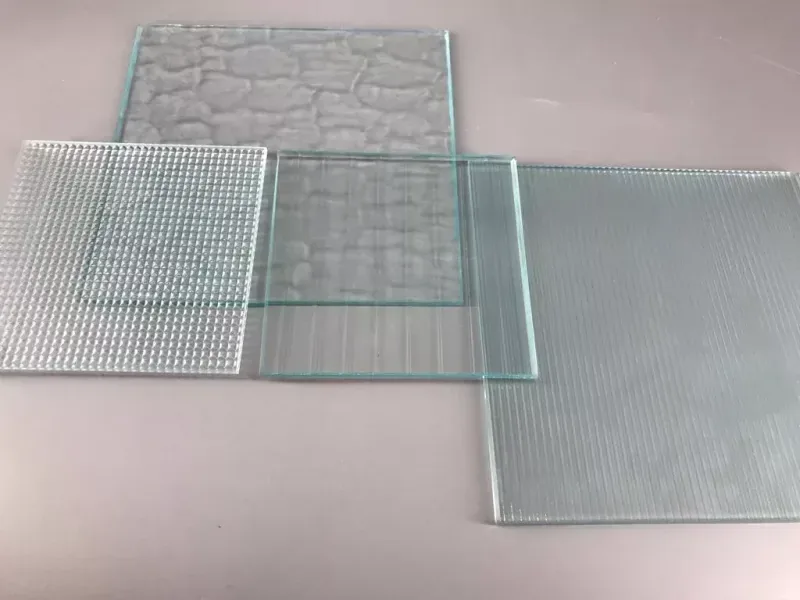
There's no single best type. The right choice depends on how much texture you want, whether the wall is lit from behind and how much privacy or reflection the space needs. Four families cover most feature wall briefs: cast relief glass, back-painted glass, reeded glass and mirror or mesh-based glass.
Cast and relief glass. This is the most sculptural option. The surface is formed with waves, spirals, leaves or layered ridges, so the wall has real depth. GLAZART's kiln-formed work sits here, and the KilnArt range is the place to start.
Back-painted glass. A smooth, glossy panel with colour applied to the reverse. It suits clean, graphic designs such as a white wall with a single red linear pattern, and it's easy to wipe down.
Reeded or fluted glass. Vertical ribs create a soft, filtered look. Tinted versions, such as bronze, add warmth and work well in metal frames.
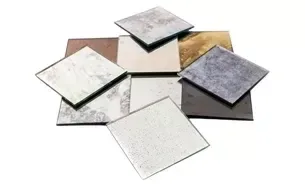
Mirror-textured and mesh glass. These add sparkle, reflection and a woven or fabric-like quality. See MirrorArt, PatArt pattern glass and TextileART for the options.
The market is moving toward customisation too. Grand View Research notes that advances in digital and ceramic printing give architects more design flexibility across hospitality interiors, retail and feature walls. In practice that means a wall can carry your own pattern, not just a catalogue one.
Global decorative glass market (USD billions) $3.8B 2025 $4.0B 2026 (est.) $6.0B 2033 (forecast) Source: Grand View Research, Decorative Glass Market (2026–2033), 6.0% CAGR.
7 Glass Feature Wall Ideas, by Space
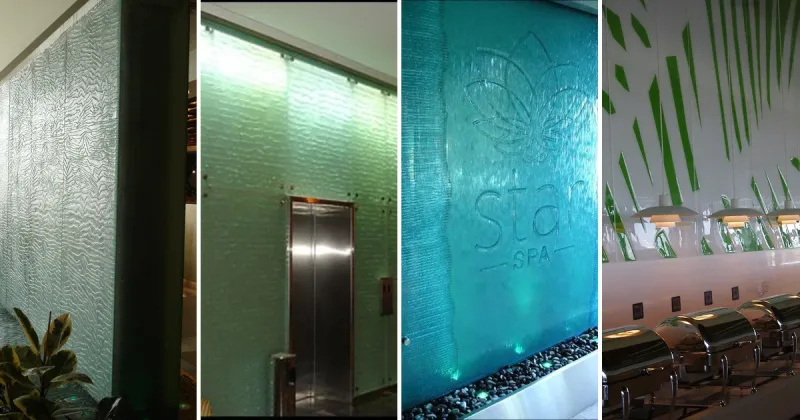
The best ideas start from the room, not the glass. Each of these pairs a type of space with a treatment that suits how people use it. They're drawn from the kinds of installations in GLAZART's feature wall gallery.
1. Sculptural cast glass in an atrium or lobby
Large relief panels in a strong colour, such as yellow or amber, turn a double-height lobby into a landmark. Natural light from a skylight does most of the work.
2. Backlit blue wave glass in healthcare or wellness
A blue wavy panel set into a timber wall feels calm instead of clinical. Backlighting gives it a gentle, water-like glow. It's a good fit for reception areas and waiting rooms.
3. Back-painted glass above restaurant seating
A white back-painted wall with a red linear pattern sits well above banquette seating. It's glossy, graphic and simple to clean, which matters in food service.
4. Botanical patterns behind booths and counters
Palm leaf and other plant motifs suit hospitality interiors. Green on a white ground keeps the wall fresh and avoids overwhelming the room.
5. Reeded bronze glass in metal frames
Tinted reeded glass in a slim metal frame gives a refined, slightly retro look. It works as a feature panel or as a backdrop to a reception desk.
6. Cast glass wave relief behind a bar
Wave-pattern panels with copper standoffs behind a bar counter combine texture, metal and light in one move. Blue or warm LED lighting changes the mood for each service.
7. Framed glass art in a lift lobby or corridor
A large framed blue glass wall gives a corporate lift lobby a focal point. Along a corridor, a water-effect panel with recessed floor lights adds movement to a space people usually walk straight through.
How Does Lighting Change a Glass Wall?
Lighting decides whether a glass wall looks flat or alive. The same panel can look completely different when lit from behind, lit from the side or left to daylight. Decide the lighting approach at the design stage, because it affects the build-up of the wall, not just the bulbs.
Backlighting makes colour glow and works especially well with thin, translucent or cast glass. It needs a cavity behind the glass, so allow depth in the wall build-up and access for maintenance.
Grazing light (from above or below, close to the surface) rakes across the relief and exaggerates every ridge. It's the best way to show off deep texture.
Daylight gives the softest result, and it changes constantly. Atriums and glazed lobbies are ideal.
A practical tip: ask for a lit sample before you commit. Colour under a showroom lamp can look very different from colour under your actual LED strips.
How Are Glass Feature Walls Fixed, and Are They Safe?
A glass feature wall is safe when the right glass is specified and properly fixed. Safety glass must either not break or break safely under impact. Toughened glass does the second: it breaks into small, less dangerous fragments, where ordinary annealed glass can break into large sharp shards.
GLAZART supplies toughened glass to the BS 6206 toughening standard, and also offers re-annealed and laminated glass depending on the application. Its stated capability is toughening formed glass of almost any scale, shape or thickness, which is unusual for textured and cast work.
Here's what BS 6206 actually measures. A 45 kg lead-shot bag is swung into the glass to simulate accidental human impact. Class A, the highest, uses a drop height of 1,219 mm; Class B uses 457 mm; Class C uses 305 mm (GlassOnWeb: Glass and Safety).
A few practical points:
BS 6206 impact test drop height (mm) Class C 305 Class B 457 Class A 1,219 Source: GlassOnWeb, "Glass and Safety" (BS 6206 classes). Higher drop height = higher impact class.
- Check the marking. A safety glass only complies if it's marked as doing so, and the mark has to remain visible after installation (GlassOnWeb).
- Know the newer standard. In Europe, BS EN 12600 replaced BS 6206 as the impact standard (Cantifix). You may see both on documents. Check the certificate rather than assuming they're equivalent.
- Ask about textured surfaces. Deep relief can affect how a product is tested and marked. Ask your fabricator for the certificate for the exact product you're buying, not a similar one. For additional guidance, see the GLAZART FAQs.
- Choose the fixing early. Standoff fixings (visible metal buttons), metal frames and bonded cladding each give a different look, and each has different structural needs.
How Do You Brief a Glass Fabricator?
A good brief saves weeks. Most delays on glass feature walls come from late decisions, not slow fabrication. Give the fabricator the wall size, the lighting plan and the safety requirement up front, and you'll get an accurate sample and a firm programme.
- Share the drawings. Include the wall dimensions, the substrate behind it and any openings, sockets or switches.
- Say what the wall does. Is it purely decorative, or does it also protect a bar back or serve as cladding in a wet area?
- State the lighting. Backlit, grazing or daylight only. Mention the LED type if it's already chosen.
- Set the safety requirement. Toughened, laminated or both, and the class your consultant or authority needs.
- Ask for a sample. Look at it in your real light, next to your real finishes.
- Confirm fixing and installation. GLAZART can take care of installation, fixtures and fittings, or give technical advice if you'd rather install the glass yourself (GLAZART).
Have a concept but no finished design? That's a normal starting point. Tell GLAZART about your project and the team will guide you from sample to installation.
Frequently Asked Questions
Are glass feature walls safe in public spaces?
Yes, when the right glass is specified. Toughened glass to BS 6206 is tested with a 45 kg impact bag, and Class A uses a 1,219 mm drop height (GlassOnWeb). Always request the certificate and make sure panels are permanently marked with the class (GlassOnWeb).
Can a glass feature wall be backlit?
Yes. Backlighting works especially well with translucent and cast glass. It needs a cavity behind the panel for LEDs and access for maintenance, so plan the depth and electrical routes at design stage. Ask for a lit sample before approving colours.
How do you clean and maintain a textured glass wall?
Smooth back-painted glass wipes clean easily. Deep relief traps dust in the grooves, so use a soft brush or microfibre cloth. Avoid abrasive pads. In kitchens or bars, a wall with less depth is easier to maintain. Ask your fabricator for care guidance.
Can I use my own pattern or colour?
Often, yes. GLAZART offers bespoke colours, textures, mirror textures and mesh glass elements for feature walls (GLAZART). Industry-wide, digital and ceramic printing is also widening what's possible (Grand View Research).
What affects the cost of a glass feature wall?
Size, glass type, thickness, toughening or lamination, colour complexity, lighting and fixing all matter. Bespoke relief costs more than standard patterned glass. Cost depends on the project, so share drawings and request a written quotation.
Conclusion
A great glass feature wall comes from a handful of early decisions. Pick the glass type to suit the space. Plan the lighting with the wall, not after it. Specify safety glass and ask for the certificate. And order a sample.
To recap:
- Cast, back-painted, reeded and mirror-textured glass each suit different spaces.
- Lighting changes the whole character of the wall.
- Toughened glass to BS 6206 breaks safely, and the class should be marked on the panels.
- A clear brief to your fabricator protects your programme.
Ready to start? Explore GLAZART's feature walls, or get in touch with your concept. You can also call +971 4 337 3400 or email info@glazartworld.com.